
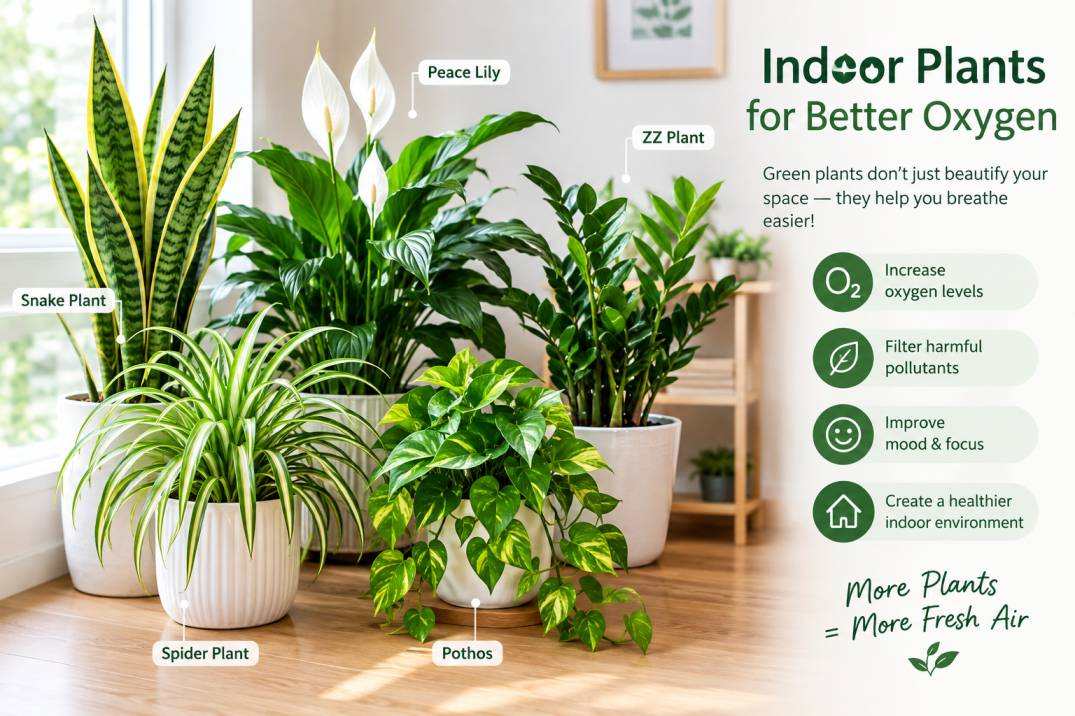

Bringing plants indoors is a simple way to add natural greenery, texture, and freshness to your living spaces. Houseplants are also preferred by many people because of their association with photosynthesis and oxygen generation. When plants are provided with appropriate light, they absorb carbon dioxide and emit oxygen.
Nevertheless, one should not be overly optimistic. Even a small number of plants in the home will not be able to substitute for ventilation or dramatically raise the oxygen levels in an average room. Nevertheless, even healthy indoor plants can contribute to a nice atmosphere and make the spaces closer to nature.
Choosing suitable indoor plants for oxygen can also encourage better indoor habits. Plants require proper light, water, air, and a clean environment to be healthy. Here are several popular options worth considering for your home.
Table of Contents
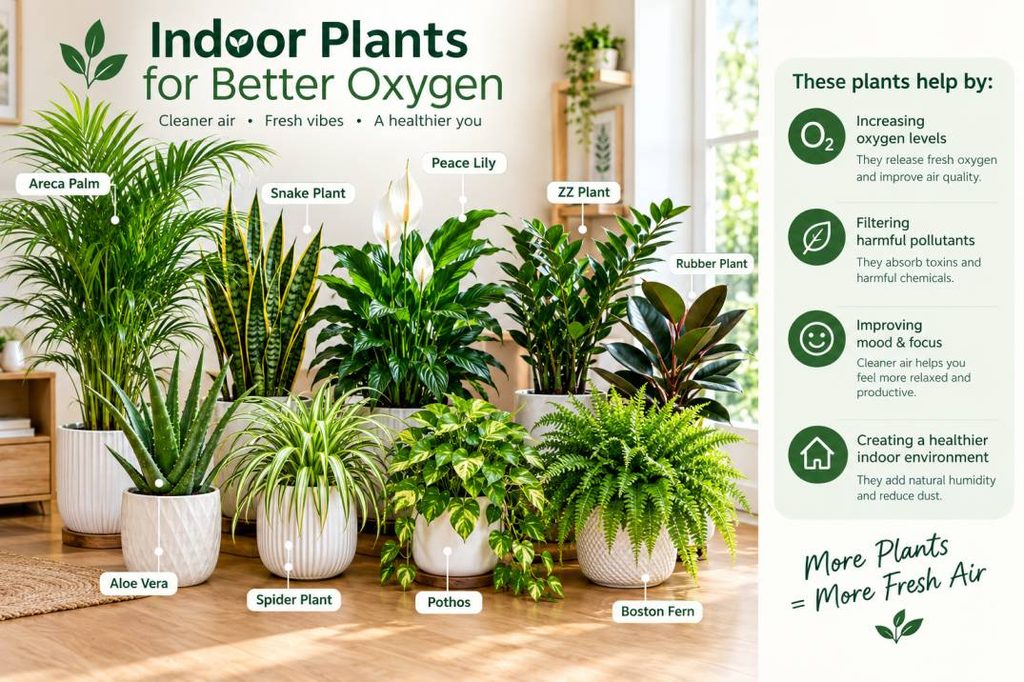
We Selected 9 Indoor Plants for Oxygen
1. Snake Plant
Snake plants are among the most popular indoor plants because they are attractive and relatively easy to maintain. Their erect leaves can be easily placed in bedrooms, living rooms, offices, and tight spaces.
Snake plants, similar to other green plants, perform photosynthesis under the appropriate light. They are especially suitable for beginners because of their tolerance to occasional neglect.
2. Areca Palm
Areca palms may be used to add a tropical look to indoor areas with their long, feathery leaves. They usually like bright and indirect light and regular but moderate watering.
Their wide leaves make them a good option in bigger rooms. It is also possible to keep the leaves clean so that the plant can photosynthesize effectively and look healthy.
3. Spider Plant
Spider plants are low-maintenance houseplants that have long, arching leaves and tiny plantlets that grow out of mature stems. They can adjust to most indoor settings.
They are able to thrive in indirect and bright light and tend to need simple watering. They can fit in shelves, desks, hanging baskets, and in bedrooms due to their small size.
4. Peace Lily
Peace lilies are characterized by dark green leaves and white flowers. They grow well in indirect sunlight and do not need to be overwatered.
These plants are able to provide visual softness to interiors. They are also useful because of their appealing leaves and flowers when you need greenery that can also serve as a source of decoration.
5. Money Plant
Money plants are commonly used as pothos and are popular due to their fast growth and ability to withstand a number of indoor environments. They are appropriate in containers, shelves, and hanging planters due to their trailing vines.
Give them bright, indirect light for stronger growth, although they can also tolerate lower-light areas. Frequent pruning is used to manage their vines and promote a fuller look.
6. Aloe Vera
Aloe vera is a succulent plant with thick leaves that retain water. It likes a lot of light and well-draining soil, so it can be placed in sunny windowsills and other well-lit places indoors.
Let the soil dry between watering. When growing aloe vera indoors, it is especially important to ensure that the roots are not overwatered, which can cause harm.
7. Rubber Plant
Rubber plants are characterized by huge and shiny leaves and organized growth. When installed in indirect light, they can be spectacular interior elements.
They do not require as much watering as certain moisture-loving plants. Regular wiping of their leaves can remove dust and also assist the foliage to maintain its beautiful look.
8. Boston Fern
Boston ferns are delicate and arching in nature and can be used to give a lush look to the interior. They are usually more tolerant to bright, indirect light and increased humidity than most houseplants.
Keep them out of direct sunlight and dry air. Frequent care about moisture may assist the fronds to be green and healthy.
9. ZZ Plant
ZZ plant is one of the most loved indoor plants for oxygen. It is very easy to maintain and needs very little watering. For its colour and nature, home gardeners love to keep it indoors.
Benefits of Keeping Indoor Plants
Selecting indoor plants for oxygen can encourage homeowners to create greener and more comfortable living spaces. Photosynthesis is a natural process in plants, which utilize light, carbon dioxide, and water to generate energy and emit oxygen.
Their advantages are not limited to oxygen production. Plants placed indoors can be used to add color, enhance the visual appeal, and make rooms more comfortable. Plant care can also be a daily routine that helps people to be in touch with nature.
One should also keep in mind that indoor plants are not supposed to substitute for adequate ventilation but to complement it. Opening windows when appropriate, maintaining ventilation systems, and controlling indoor pollutants remain important for overall indoor air quality.
How to Keep Indoor Plants Healthy?
Even the most adaptive plants require appropriate conditions to grow. Begin by choosing a place that suits the light needs of the plant. Plants should not be placed directly near heating appliances or powerful air-conditioning vents.
Check the soil before watering instead of following the same schedule for every plant. The moisture needs of different species vary, and the seasonal variations may influence the rate at which soil dries.
Use containers with drainage holes to prevent excess water from collecting around the roots. Remove withered leaves, dusty leaves, and inspect frequently to see if there are insects or other indicators of stress.
Create a Greener Indoor Environment
Adding indoor plants for oxygen can make your home feel more lively while bringing natural greenery into everyday spaces. Snake plants, areca palms, spider plants, peace lilies, pothos, aloe vera, rubber plants, and Boston ferns have varying appearances and care needs.
Choose plants according to your available light, room size, humidity, and maintenance routine. Indoor plants can be a healthy and beautiful addition to a home environment with proper care and realistic expectations.
