
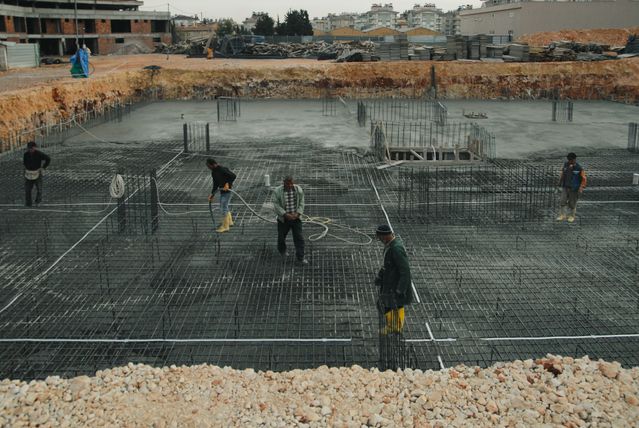

Most people who are about to embark on a custom home will tell you they began the process by putting together a mood board. What they should have done first is get the soil report. The decisions that define the build budget, timeline, financing, and even builder options all happen on the not-so-intriguing front before a single countertop has been selected. Here are my seven recommendations for decision-making before building your dream home.
Table of Contents
Get the Site Tested Before Falling In Love With a Floor Plan
A geotech can tell you what kind of dirt you have on your site, how much bearing capacity there is, and where water tends to collect. That information can save you tens of thousands of dollars in errors when it comes to foundations for residential construction. Your basement is going to crack and leak within five years if you build it on expansive clay. You will be swimming in your basement if you finish it on a low-lying area with a high water table.
How do you know what’s under your future home? You can hire a soil engineer to “perc” your lot and do a few basic borings, or you can do it yourself. Skip the drill rig and the dozer test, and you’re literally playing in the dirt on the most critical issue of them all: the foundation. Expansive clay, high water tables, and poor drainage can add up to hundreds of thousands of dollars in additional costs before the excavation even begins.
Understand That Construction Loans Work Nothing Like Mortgages
With a construction-to-permanent loan, the borrower receives funds according to a financial blueprint set by the lender, which often requires inspection milestones (foundation, framing, mechanical rough) and may require a signature or inspection for each disbursement. In other words, you don’t write the checks; the lender does… on the lender’s schedule.
Construction loans also usually require a higher down payment than conventional mortgages, and the lender will likely ask you to capitalize the interest reserve so you can make payments during the build on the money the loan disburses to you to avoid paying twice. Make sure to get pre-approved for a construction loan, not a standard mortgage, and ask the lender how much time the draw process will be delayed if the inspector cannot get to the site for a week. That detail will be far more important to your budget than the interest rate.
Think of the Budget in Three
The single worst budgeting mistake I see customers make when building their custom home is thinking of “the budget” as one number. There are always three budgets to think about when building a custom home. First, there’s the hard cost or the construction budget, which reflects the cost of labor and materials or the contract price. Second is the soft cost, which reflects all the expenses that aren’t reflected in the contract price, including permits, engineering, design fees, surveys, and lender fees. Third is the contingency, which is frequently fought over between contractors and customers.
Good builders and lenders will tell you to plan on having an additional ten to twenty percent in the budget beyond the contract to reflect the unknown unknowns. Do the math on your build budget and add it in as a line item rather than a deficit. A build budget without a contingency is not lean; it’s vulnerable.
Leave the Cost-per-square-foot to the Small Print
When a builder gives you a cost figure for your custom home, remember that it almost always reflects either the total square footage or the construction cost per square foot. Square footage is essential to determining how much it costs to build. Larger homes tend to have lower construction costs per square foot than smaller homes. Details add to the cost of construction. Better materials, appliances, and finishes increase the cost per square foot.
Choose Your Builder Like You’re Choosing a Business Partner
The right builder preclears as many of those obstacles as possible. Whether it’s permits, breaking ground, milestone inspections, or final inspections, the builder might not control them, but they should have a track record handling them with relative ease. Dedicated custom home builders who manage geotech surprises and odd architectural details on a regular basis will do a better job of protecting your timeline than builders used to working within a production housing framework
That means negotiating the risks connected to the job. Get clarity on the extent of the work within the contract scope (excavation can hit water, rock, or whatever else is below your future foundation). Ask about the potential costs and liabilities associated with dealing with unanticipated soils or other site costs. Specify the terms that connect field conditions to change orders and time impacts. Make sure it’s not unreasonable to expect these to happen without feeling as if your contract is being held over your head. Your builder is your teammate, not your adversary, and that has to be understood, negotiated, and reflected in the contract language, even if things get messy.
Decide Design-build or Design-bid-build Before Signing Anything
In a design-bid-build setup, an architect designs the house, and a separate general contractor builds it. It sounds like there’s not much difference between the two approaches, but the practical implications for your build can be significant. The field conditions rarely match the expectations of either the architect or the contractor on a design-bid-build project. When they don’t, the two sides can find themselves in totally different places on a variety of issues, with your schedule bearing the cost
With design-build, there is still a design professional developing the plans for the house, but they are employed by the general contractor who will do the work. By putting responsibility for both design and construction under one roof, design-build puts one “neck” on the line for your project, reducing the risks for change orders and schedule impacts
If a design element fails during construction or a mechanical system has to be re-routed because the wall wasn’t built to the necessary specifications, there is no question about who is responsible for the costs or time impacts. For a custom home with unique constraints on a specific site, design-build is an excellent option that mitigates many of the risks associated with design-bid-build. It may sound simple, but it can be significantly more cost-effective.
Lock the Language Before Framing Breaks Ground
Decisions about a written scope of work and change order procedures might not seem like design decisions, but they are. Once you begin construction, change orders are inevitable. A fixture gets discontinued, the clients want to rearrange their floor plan, or field conditions require substitutions. What protects you most is having a process already in place for evaluating, pricing, and approving those change orders before any of them occur. Contracts that leave these details vague are where cost overruns occur. Get precise about how additional work gets priced and who gets to approve it, and under what circumstances, before the first change order is even discussed
What Can Wait, and What Can’t
One of the reasons people get tangled up in the details is that they fail to recognize that some decisions are first-decisions, and some first-decisions are easy.
Foundations are first-decisions; there are very few options once you begin pouring concrete for your foundation. Same with choosing to put your kitchen on the east side of the house instead of the west. Exterior massing – to use an industry term I employ in my day job as an architect – is not something you can decide on later; it creates design conditions for the entire project, including the interiors. The envelope decision is the easiest first-decision; make it poorly, and it could ruin a courtyard plan with cold winds from the east on a dark winter morning. Incorrect assumptions about the performance of insulation values can lead to an undersized HVAC system and a perpetually chilly home
Make first-decisions when all the easy decisions are still on the table. You can always tweak them later, but you need to make them while you still have time
Let Lot Orientation and Daily Life Drive the Layout, Not Square Footage
Once the first-decisions have been made, it’s time to think about the house plan. Solar orientation is functional, not decorative; it defines the difference between a dark home and a bright home, a drafty cold room and a snug resting place, and a gigantic electricity bill versus a tiny one. It’s a matter of where the sun rises in relation to your morning shower. Space planning is about relationships – where the mudroom connects to the garage versus how the primary suite connects to the outside. Don’t use the square footage to define the value of one space over another. Get out on the lot and see where the sun rises in relation to your morning shower.
Build Your Timeline Around the Average, Not the Aspirational
According to the U.S. Census Bureau’s survey of construction, the average single-family home takes eight months to build. If you want to build an average home on an average lot with average financing, you can expect to be finished in about eight months. Your custom home, however, will take much longer; twelve to eighteen months to complete is more realistic. In most cases, weather and workforce limitations will cause construction to take even longer. Getting permits and approvals can add weeks or even months to the construction timeline before a single shovel of dirt is moved, which makes applying for those permits early a prerequisite for a quick build, not an afterthought. Sequence your financial commitments, design development, and permitting so that the build compresses rather than expands when weather and supply chains derail momentum because they always do.
None of these seven decisions appear on a Pinterest board, which is precisely why they get ignored. The lot survey, financing structure, contract language, and builder selection don’t appear on a mood board, but they are the enablers for all the fun stuff. They help keep the build on schedule and within budget, so it can happen when the mood strikes.
