
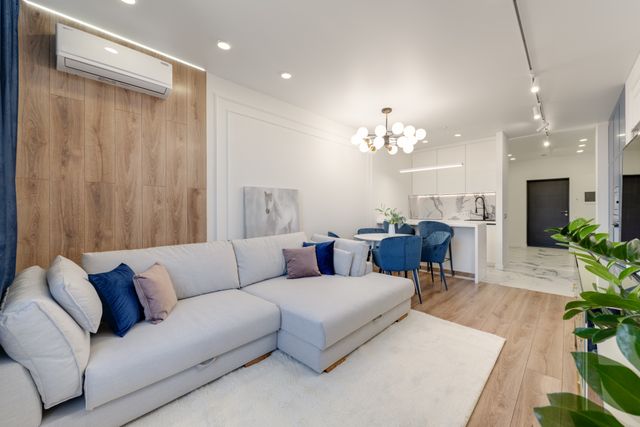

Most people light a room backwards. They buy a fixture they like, screw in whatever bulb came in the box, and wonder why the space feels either like an operating theatre or a cave. It’s an easy trap to fall into, since fixtures are the part you actually see in the shop, while the bulb feels like an afterthought you grab on the way to the till. But the fixture is just the vessel; the bulb and its placement are what actually do the emotional work in a room.
The better approach starts with the feeling you’re after and works down to the technical choices from there.
Table of Contents
Decide The Mood Before You Touch A Single Bulb
Emotionally, every room serves a specific purpose, not just functionally. For instance, a living room may need to be a tranquil space on a quiet Tuesday evening, but a social hub on a lively Saturday night. A home office should inspire focus. Meanwhile, a bedroom should relax you and not energize you in the morning.
Define the mood you’re going for first – whether it’s tranquility, socializing, focus, intimacy, etc. – and use that as your guiding light for every other decision: color temperature, height of fixtures, where to put the dimmers. Skip this step and you’ll make choices based on what wowed you in the showroom, which often doesn’t equate to the reality of the room’s usage.
Get The Height And Placement Right
Lighting that is concentrated at a single height (typically straight down from the ceiling), not only flattens a room, but also casts unattractive shadows on people’s faces as well as furniture. Opt for lighting spread across 3 heights for the best effect. Ceiling fixtures spread light across the ceiling for ambient coverage; wall sconces, and recessed or track lights are the most common choices for mid-height task lighting in living and dining rooms, while pendants are the go-to choice for a more focused mid-height light in kitchens or over dining tables; and table or floor lamps spread light across the floor for a lower, warmer glow. This light will bounce back off the floor and fill in some of the shadows cast by the mid-height light, leading to a more inviting look and giving the room a feeling of depth.
Once you are working across more than one room, or trying to get several lighting zones to feel like part of the same home rather than a collection of separate decisions, it’s worth bringing in an Interior designer who can interweave the ambient, task, and accent layers with the rest of the room’s design.
Match Colour Temperature To What The Room Is For
Light bulbs can be categorized based on the Kelvin scale and this is more important than you’d think. The number of Kelvins (K) indicates the color temperature of the light the bulb emits. Warmer light, about 2700K to 3000K, caters a soft, cozy atmosphere. That’s why it’s ideal for the living room or bedroom. Cooler light around 4000K and above feels fresh, sharper, and gives a more alert vibe. This is preferable for rooms where you need to focus more, like the kitchen, bathroom, or home office.
It’s a common mistake to mix the two somewhere in the middle. A warm lamp and a cool lamp in the same room can negate the positive impact of each other, throwing the entire room off-balance in the process. And good room lighting isn’t cheap.
Put A Dimmer On Everything That Isn’t Task Lighting
One of the cheapest, quickest mood changes available to a homeowner. Lowering the light level in a room by 30-50% turns it from daytime-functional to evening-relaxed in the blink of an eye, and it costs a fraction of what a new fitting would. Smart bulbs and app-controlled dimmers take this a step further, allowing you to save specific “scenes” – bright and cool for cleaning, low and warm for a dinner – without ever touching a physical switch.
Not every dimmer works with every bulb, though, so check compatibility before you buy. Older dimmers were built for incandescent bulbs, and pairing one with an LED can cause flickering, buzzing, or a limited dimming range that stops well short of a proper low glow. Look for dimmers explicitly rated for LED use, and where possible, buy the dimmer and bulbs together, or at least confirm they’re on each other’s compatibility lists. It’s a five-minute check that saves you from ripping a fitting back out of the wall a month later.
Don’t Ignore What Your Surfaces Are Doing To The Light
The lighting in a room depends as much on the surfaces it’s interacting with as it does on the bulb in the first place. It’s why every design expert advises painting a small test patch of colour on your wall to see how it looks throughout the day before you pick one. The same bulb in the same fixture will read completely differently depending on what it’s bouncing off. Matte walls absorb light and keep things moody. Glossy paint, mirrors, and polished surfaces bounce it around and make a room feel brighter and cooler than the bulbs alone suggest.
Natural daylight matters here too – a well-placed mirror opposite a window can noticeably lift a room’s daytime brightness without adding a single artificial light source. This isn’t just about aesthetics either. The Heschong Mahone Group’s 1999 study for Pacific Gas and Electric found that students in classrooms with the most daylight progressed 20% faster in maths and 26% faster in reading than those with the least. Light quality doesn’t just set a mood – it changes how people perform in a space.
Get the layers right, match the colour temperature to the job the room is doing, and put dimmers on everything you can. The mood follows from there.
