
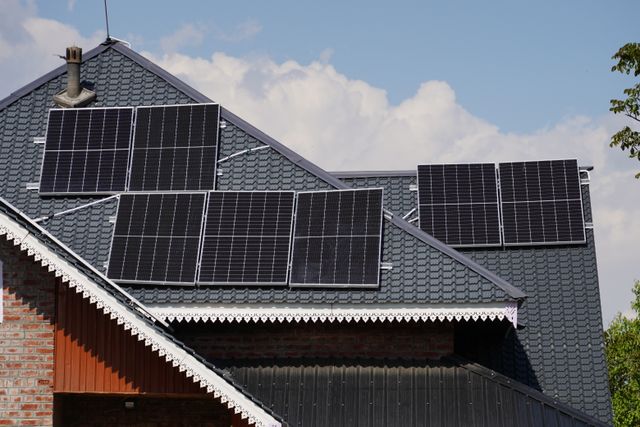

Your solar array is a 25-year bet on the Arizona sun, and monsoons are the one part of the year that can put that bet at real risk. Dust, hail, wind, and lightning, between mid-June and the end of September, rooftop systems get hammered more than any other time of the year, and most homeowners have no idea how much output they’re losing until they check their production numbers.
Table of Contents
The Dust Problem is Bigger Than it Looks
Dust build-up on solar panels, also known as soiling loss, results in energy output being lost due to dirt and grime accumulating on the panel surface. In Arizona, this has a significant impact. The National Renewable Energy Laboratory (NREL) estimates that soiling losses average around 7% for PV systems across the US. However, this figure can exceed 25% in arid and dusty regions like the Southwest.
A quarter of the system’s production is lost simply because the panels are not clean. Dust accumulation has an even greater impact when the outside temperature rises throughout the summer months. As well as blocking valuable sunlight, the dust also insulates the panel surface, preventing heat from escaping. This heat increase results in the panel running at a higher temperature. PV modules experience reduced output as their temperature increases, which leads to reduced efficiency of the panel. The combination of the panel reaching higher temperatures and the reduced light hitting the panels results in the panel losing even more efficiency because of the dust.
Why DIY Cleaning Usually Backfires Here
Grabbing a garden hose and doing it yourself sounds reasonable until you think through Arizona’s specific conditions. Local tap water is hard, loaded with minerals that don’t evaporate cleanly off hot glass. Spray hard water on a panel that’s been sitting in 110-degree heat and you’ll bake mineral spots directly into the surface – spots that then block light permanently, which is the exact problem you were trying to fix.
There’s also the roof-access issue. Climbing onto a roof during or right after monsoon season, when surfaces are wet, wind gusts are unpredictable, and structural debris might be loose, is not a great way to spend a Saturday. Professional crews use deionized water specifically because it doesn’t leave mineral residue, and they know how to inspect racking and wiring while they’re up there. This is really the core reason most Arizona solar owners hire out solar panel cleaning rather than handle it themselves, it’s not laziness, it’s avoiding a mistake that can void a 25-year manufacturer warranty over a $15 hose attachment.
What Monsoon Season Actually Does to Your Panels
Arizona’s monsoon season typically occurs between June 15 and September 30. Your solar system is vulnerable to numerous threats during the monsoon season, including haboobs, hail, high winds, and lightning.
Dust storms can render your solar panels practically useless in just a few minutes time. Lightning strikes, even if they don’t make direct contact, can send a surge of electricity through your system and fry your inverter. The microcracks formed by hail and debris might remain invisible to the naked eye, but they allow electricity to escape over time.
Timing Your Maintenance Right
The optimal time to schedule a professional cleaning and inspection is after the monsoon’s heaviest dust events, but while we’re still getting occasional dust-laying storms. This gives you the best opportunity to catch damage early without the double whammy of a loss of production on the still-dirty modules, and increased soiling on modules already under-producing due to damage. Waiting until the monsoon season ends just costs you more money.
During this cleaning, a good professional will be alert to damage and safety concerns. A key observation on this visit should be which types of damage to the modules deserve mitigation on the remaining time you own the array. Pair that inspection with your production monitoring app. If output doesn’t bounce back after a cleaning, that’s a signal something else, a cracked cell, a loose connection, needs attention before it turns into a bigger repair.
A Simple Annual Checklist
Before the monsoon season arrives next year, it is important to take a few simple steps to ensure your system is as productive as possible. Here are some items to check off your list:
- Any trees or shrubs that need trimming before they drop a season’s worth of debris on the array
- Critter guards that need to be installed or inspected. Birds love nesting under panels in the spring and fall.
- Make sure your inverter has adequate protection from lightning surges and is properly grounded.
- Have your racking and mounting hardware checked to make sure the wind hasn’t loosened any bolts.
- And if you haven’t had your system taken apart and cleaned by a professional for several years, now is a good time to schedule that. Wait until after the heaviest dust events have passed.
None of this is brain surgery, but skipping it is how a system that should generate steady returns for 25 years starts underperforming by year three. Those of us on APS or SRP net metering have already paid for every kilowatt-hour our array is projected to produce each year. Every one of those kilowatt-hours that you lose to dust or damage is lost money you’ve already paid for.
Your panels don’t need much to keep working the way they were designed to. They need protection during the four months a year Arizona throws everything it has at them, and a little attention the rest of the time.
