
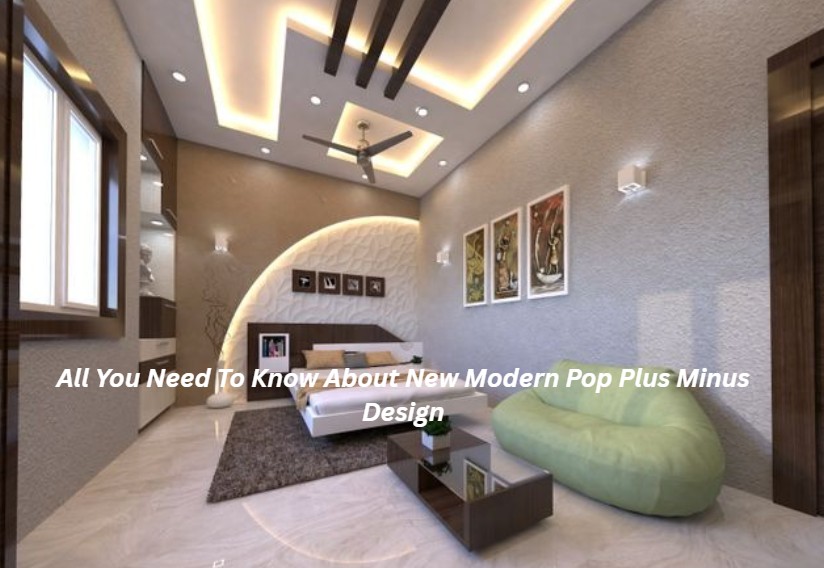

There is nothing that changes a room as quickly as a well-designed ceiling and in Indian houses, POP ceilings have been the standard method of providing character to the ceiling. The plus minus technique is a strong favourite among the numerous styles that can be used to provide depth and a feeling of luxury without overpowering a space. This traditional concept has been redesigned today to suit modern preferences, and the new modern pop plus minus design has emerged: a more minimal, clean, and light-oriented development of the old concept.
Regardless of whether you are constructing or renovating, knowing how this style functions will enable you to make an informed decision. In this guide, we cover what it is, what makes the modern version special, where it works best, its advantages, and the practical points to keep in mind.
Table of Contents
What Is POP Plus Minus Design?
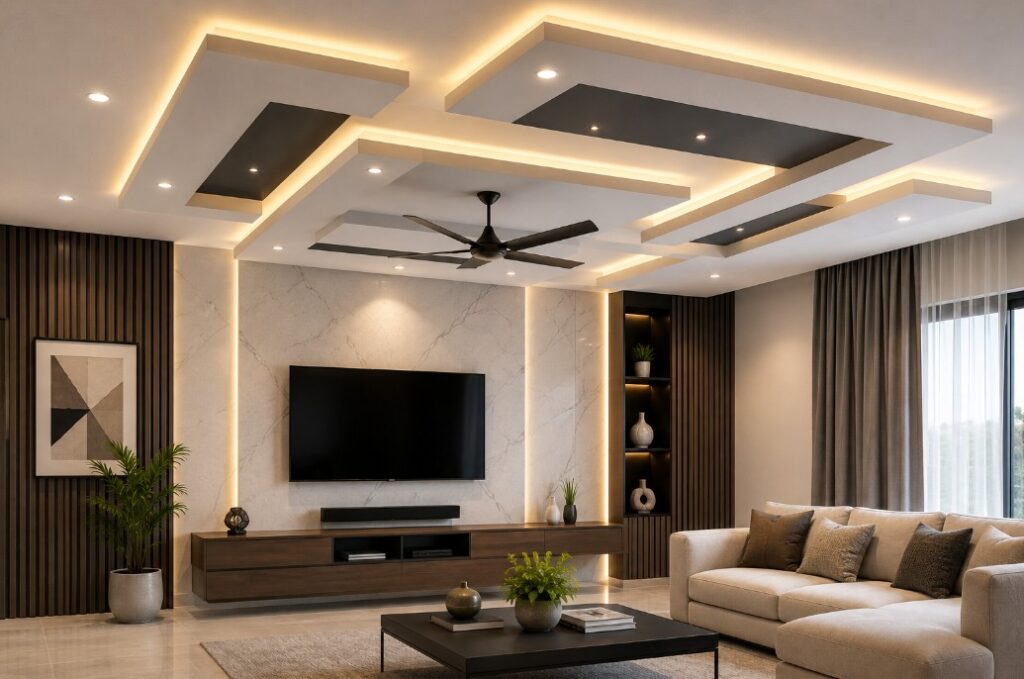
POP is an acronym of Plaster of Paris, which is a versatile gypsum-based material that is commonly used to make false ceilings and ornamental wall features. The actual method is referred to as plus minus: some parts of the ceiling are raised or projected out (the plus), others are sunk or hewn in (the minus). The combination of bulging and recessive spaces produces a three-dimensional effect, which traps the light and shadow, and provides a flat ceiling with a sense of motion and depth.
Historically, plus minus designs were very decorative, with elaborate curves, floral patterns, and heavy ornamentation that was appropriate to the grand interiors of a few decades ago. The modern interpretation keeps the same clever layering principle but strips away the excess for a look that feels fresh and current.
What Makes the New Modern Style Stand Out
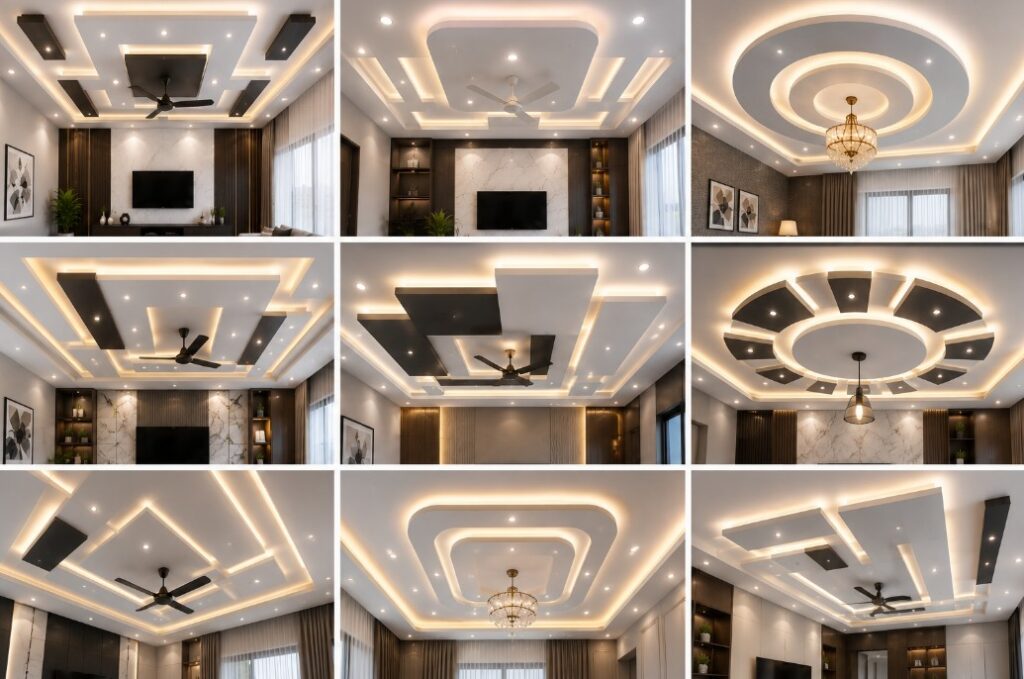
The new modern pop plus minus design is characterized by restraint, accuracy and a close association with lighting. Instead of patterning the entire ceiling, it employs a few well-placed levels and sharp lines to create a subtle but dramatic statement. It has three attributes that distinguish it among older styles.
- Clean Geometric Lines
Where the older designs relied on curves and flowery extravagance, the modern one is inclined to straight lines, rectangles, and plain geometrical forms. These straight lines produce a serene, uncluttered appearance that is in line with the minimalist furniture of today and open plan designs. A plain, rectangular, border, with a soft step, may be much more refined than a crowded, overwrought ceiling.
- Concealed LED and Cove Lighting
The modern approach is centered on lighting. The sunken minus strips are ideal to conceal LED strips, producing a diffused, indirect light that spreads across the ceiling. Cove lighting, spotlights and warm downlights can all be installed together, allowing you to alter the atmosphere of a room with the flick of a switch. It is this union of form and light that makes the style feel premium.
- Minimal, Layered Depth
Instead of many competing levels, the modern design typically uses just two or three layers to suggest depth. This calculated stratification prevents the ceiling to be low or claustrophobic, yet still provides that trademark three dimensional quality. The outcome is graceful, airy and comfortable to coexist with in the long run.
Best Rooms and Where It Works
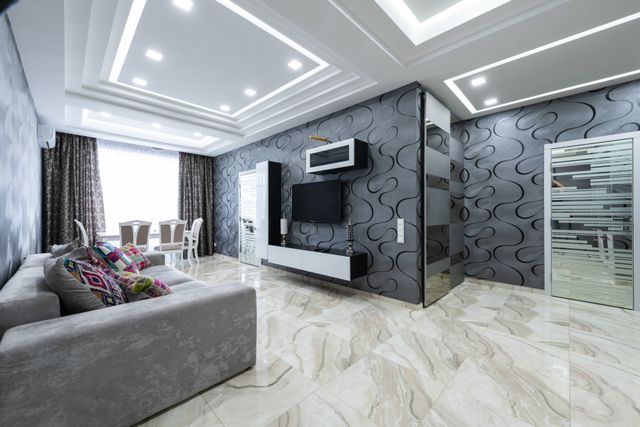
One of the biggest strengths of this style is its versatility. A central light can be framed with a well-planned new modern pop plus minus design in the living room, which can define a seating area, and the space will immediately seem more thoughtful. A more relaxed, less elaborate design in bedrooms with warm hidden lighting can be used to provide a calming, cocooning effect over the bed. Dining spaces are no exception, as a clear ceiling area can emphasize the table and ground the room.
The technique can be applied even to compact flats, as long as the design remains light and minimal. The trick is to scale the layering to the size of the room: small spaces require the delicate designs of a single step, whereas larger halls can afford more bold multi-level designs without feeling claustrophobic.
Advantages of Choosing This Design
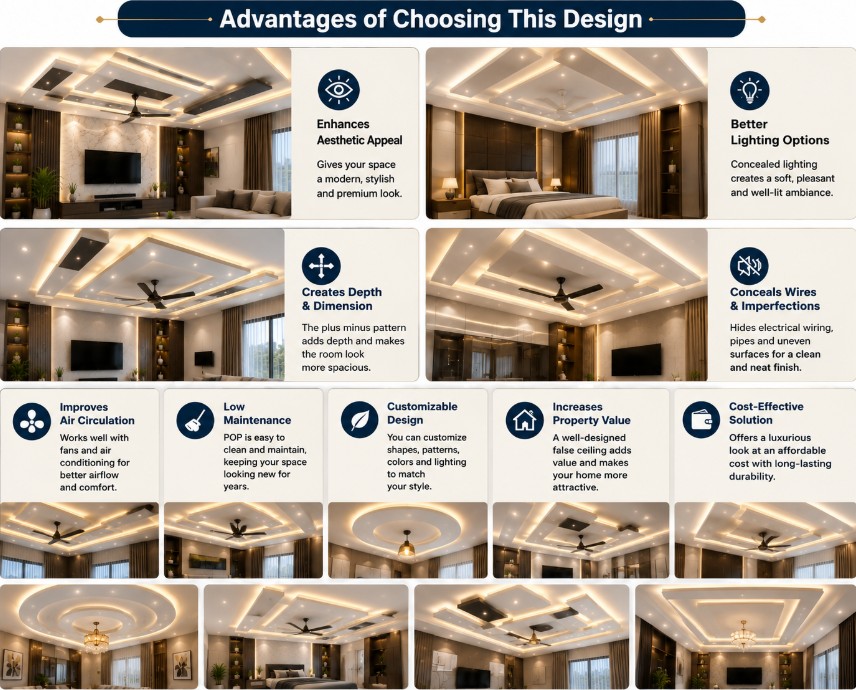
In addition to its aesthetic appeal, this style has a number of practical advantages that can be used to explain its continued popularity in the contemporary home.
- Conceals Wiring and Imperfections
False ceiling is a nice way of covering electrical wiring, air-conditioning ducts, and any irregularity of the original slab. This provides you with a smooth, perfect surface above and a neat means of laying hidden lighting and cabling out of sight.
- Elevates the Overall Aesthetic
The depth and built-in lighting give an immediate impression of polish to a room. A carefully planned ceiling attracts the gaze upwards and unites the entire interior, even simple furniture can become more high-end and purposeful.
- Flexible and Cost-Effective
POP is not very expensive, simple to mould, and fast to install by skilled workers. It is mouldable into virtually any shape you desire, providing immense design freedom at a lower cost than some other materials. This versatility makes it a good option in a large spectrum of budgets.
Points to Keep in Mind
It is as pretty as it is, but there are some practical considerations before you commit:
- Ceiling height: Any false ceiling reduces the height of the room by a few inches, thus in case your ceilings are already low, make the design as minimal as possible to prevent the boxed-in effect.
- Skilled labour: POP work is an art, and an expert crew is what will turn a clean finish into a crass one.
- Moisture sensitivity: POP is sensitive to moisture, and should not be used in damp environments, or should be used with adequate waterproofing where necessary.
- Periodic maintenance: POP is tough, yet hairline cracks might develop with time, and thus the occasional touch-up might be necessary.
Talking these issues over with your contractor beforehand will enable you to maximize on your new modern pop plus minus design.
Trending Ideas to Try
In case you need some inspiration, some of the latest trends include:
- Mix materials: Add POP with wooden panels or gypsum board to the clean lines to make it warm and textured.
- Light curves: Wave or curved channels should be used sparingly to smooth out an otherwise angular scheme.
- Smart lighting: Select colour-changing or dimmable LEDs to change the mood between bright and functional to soft and relaxing.
- Border layouts: Attempt border-style designs, which are placed around the edge of the ceiling and leave the centre open, a style that is particularly common in minimalist houses.
- Matte and warm: Combine a matte ceiling finish with warm lighting to create a warm, modern appearance that will never be out of style.
Conclusion
The new modern pop plus minus design proves that a timeless idea can feel entirely of-the-moment when reimagined with clean lines, thoughtful layering, and clever lighting. It offers the best of both worlds: the dimensional richness that makes plus minus ceilings so appealing, and the understated finish that suits contemporary living.
Being able to conceal flaws, incorporate hidden lighting, and enhance the beauty of any room, it is one of the most fulfilling upgrades to a home. With a team of professionals, a design that fits your space, and having practical considerations, you can have a ceiling that is not only beautiful but also endures the test of time.
Read more interesting posts here.
