

Deciding to buy a house is one of the biggest decisions you will make. It’s not just a lifestyle choice, it’s also a financial one. So, after taking the big step and buying your own house, it’s essential to take good care of it.
Table of Contents
Why Preventative Maintenance Is Actually A Financial Strategy?
Many homeowners only maintain their home when something breaks. Then they call a repairman and pay whatever the cost. Unfortunately, this method wastes money and causes unnecessary stress.
On average, emergency home repairs cost homeowners $3,018 annually! Regular preventive maintenance could also help reduce that number by preventing up to 70% of breakdowns.
Maintenance will always cost money. But by acting preventatively when it’s scheduled to happen versus reactively when it’s calling for the checkbook, you’ll spend far less over the long run.
Spring: Start With Water Management
Water can cause a lot of damage to a home. Not necessarily the Hollywood-style water, like a flood, but the persistent, insidious kind that works its way inside over time. A small flaw in the grading of the property, a gutter that’s clogged or leaking – any of these things, over months or years, can cause damage that costs thousands to repair.
Before the spring rainy season, follow these simple steps to make sure water stays where it should stay – outside your house. You don’t need advanced skills or specialized tools – if you can handle a hose and a shovel, you’re good to go.
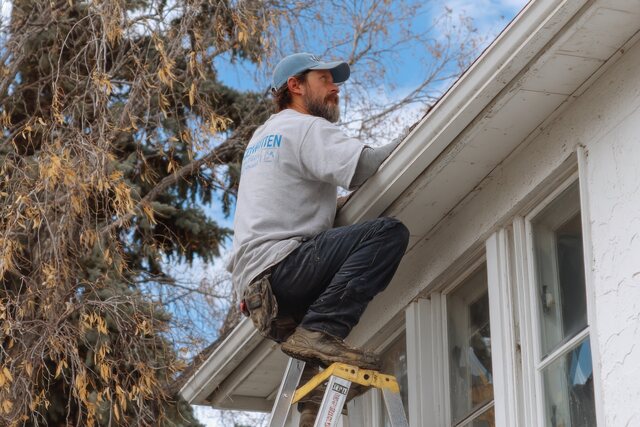
1. Gutters Take advantage of a sunny day to attend to this unpleasant task. Clean out leaves and other gunk from the gutters, then run a hose on the roof and make sure the water runs off into the gutters. Finally, make sure all the brackets are tight and all the seams sealed. If you don’t have the skills or equipment to safely do this work yourself, hire someone to do it – the cost is minimal compared to the problems that can occur from water infiltration.
2. Downspouts Next, check where the downspouts discharge. Some houses have downspout extensions that deposit rainwater right against the foundation. These can be moved for $20 or so and will save you thousands in basement repairs. Make sure they discharge at least four to six feet from the foundation. If necessary, add an extension.
3. Grade Make sure all the soil slopes away from the foundation. Adding topsoil is a pretty easy DIY job. Walk around your house and just make sure that no dirt is sloping back to the walls. This is how all the water from your roof and gutters leave the downspouts and continue to flow out and away from the house.
Spring and Summer: The Thermal Envelope and Cooling System
Before it heats up, tune up your air conditioning. Start by sorting the air side of the system – something most homeowners overlook. Air conditioning filters are replaced by most Americans once a year. They should be changed every two to three months, depending on filter type and household. A dirty filter causes the system to push air too hard, shortens the equipment’s life, and delivers dirt into your living space.
Outdoors, take a look at the AC condenser unit. Over winter, it collects dust and debris. Use a gentle shower from the garden hose (not a pressure washer) to clean the fins and restore airflow. Bent fins or issues with the refrigerant line should prompt a technician call, not a DIY task. Refrigerant handling demands a license.
Inside, check caulking around windows and doors. Holes in the thermal envelope mean the system cools air that you immediately lose outside. A few dollars for a tube of new caulk and an hour of time pays for itself in lower summer cooling bills. While you are at it, check the door frame weatherstrip. If you can see daylight around a closed door, you are losing conditioned air continuously.
Summer: Siding, Decks, and Outdoor Surfaces
During summer, you have the dry conditions and long daylight hours necessary to perform maintenance and make repairs that prolong the life of the home’s exterior and protect its value. These jobs aren’t glamorous. But they should take priority over pretty renovations because they prevent deterioration.
Walk the entire perimeter of the house and inspect the siding. You’re looking for cracks, gaps at seams, soft spots that indicate moisture damage, or evidence of pest activity. Insects and wood-boring beetles often enter through compromised siding, and what starts as a cosmetic issue can become a structural one if the framing behind the siding gets involved.
If you have a wood deck or patio, summer is when you assess and treat it. Pressure wash the surface to remove algae, mildew, and gray oxidation. Once it’s dry, inspect the boards for rot, raised nails, or unstable sections. Loose boards and failing fasteners are fall hazards. Once any structural issues are fixed, apply a sealant or deck stain to protect against UV exposure and moisture. Wood left untreated will crack, warp, and rot – sealing it every one to two years extends the lifespan significantly and keeps it safe.
Autumn: Heating, Plumbing, and Winterization
Autumn is the most important maintenance window of the year for homeowners in cold climates. The work you do before the first freeze determines how you get through winter.
Schedule a professional furnace inspection in September or October, before you actually need the heat. A technician will check the heat exchanger, clean the burners, test the ignition system, and flag anything that’s at risk of failing mid-season. This is not a DIY task – a cracked heat exchanger, for example, can allow carbon monoxide to enter the living space. The inspection cost is low relative to what it catches.
Outdoor plumbing needs to be shut down before freezing temperatures arrive. Disconnect garden hoses, turn off the shutoff valves for outdoor spigots, and open the outdoor faucets to let any remaining water drain out. Pipes in unheated spaces – crawlspaces, attached garages, exterior walls – should be insulated with foam pipe wrap. A burst pipe during a cold snap can cause tens of thousands of dollars in water damage.
Garage Door Winterization – What Most Homeowners Miss
The garage door is typically the largest moving part of a home, and the cold can really affect its operation. Metal contracts, the lubricant thickens, and a door that functioned perfectly well in October may have difficulty opening or closing properly in January.
Each fall, check the flexible bottom rubber seal on the door. If it’s cracked, brittle, or missing chunks, cold air, moisture, and critters can enter your garage. Replacing the seal is cheap and frustration-free. Also, make sure to lubricate the tracks, rollers, and hinges with a silicone- or lithium-based spray – not WD-40, which will gum up the works.
Then, to ensure the safety reverse is working properly, test it. Place a flat object (like a two-by-four) flat on the floor in the door’s path and close the door. It should reverse as soon as it hits the wood. If not, the auto-reverse is out of adjustment or inoperative. That’s a safety no-no.
Please don’t try to adjust the torsion spring yourself. These heavy-duty, high-tension springs help to bear the door’s weight, making it easier to raise and lower. With a broken or poorly tensioned spring, your door opener may struggle, the door may open unevenly, or the door may be excessively heavy to lift or lower manually. This can put the opener under further strain and lead to other malfunctions. A local professional in working with expert garage installers should be the one to handle torsion spring adjustments safely with the right tools and training.
Winter: Indoor Safety and System Health
Now that your home’s exterior work is complete, it’s time to turn your focus inside. Winter is a great time to tackle home maintenance projects that directly affect your indoor air quality, safety and comfort.
Test the batteries in your smoke and carbon monoxide (CO) detectors, then test the detectors themselves by pressing the test button. If your CO detectors run on batteries instead of the home’s electrical system, replace the batteries every year even if they seem to still have some juice left – always err on the side of caution. Replace the entire detector every 5-7 years or per the manufacturer’s guidelines. Carbon monoxide is odorless and deadly, and you’re more likely to experience CO buildup when the house is closed up tight and the heat is running.
Drain your water heater once a year to remove sediment and maintain its efficiency over time. Sediment builds up in the bottom of your tank as water heats and cools, and the sediment acts as an insulator, forcing your tank to use more energy to keep the water hot. To drain a few gallons, simply hook up a hose to the unit’s drain faucet, usually located near the bottom, and empty the water into a floor drain or outside. Take care not to drain more than a few gallons, and never drain an electric water heater when the power is turned off – the unit needs to be full to avoid damage.
Check the home’s interior for drafts, especially around electrical outlets and switch plates on exterior walls. These are surprisingly common air infiltration points. Foam gaskets sold at any hardware store fit behind outlet covers and reduce infiltration noticeably.
Knowing When To Call A Professional
There are maintenance tasks that you really can do yourself, and other tasks where a mistake can be catastrophic and a pro is the only answer. Changing filters, cleaning gutters, testing detectors, resealing a deck – all those are well within the scope of most homeowners, they’re just a matter of time and attention, not specialized knowledge.
Then there are tasks that require professional knowledge, training, and tools. Electrical work involving your panel, HVAC work with any kind of refrigerant, your gas line, any type of structural framing, and all garage door torsion spring repairs. Almost every one of those will cost you less to have a pro repair than an injury or made-worse problem due to a bad DIY fix.
The idea of a seasonal checklist is not that you’re supposed to do it all yourself. The idea is that you’re supposed to look at it all yourself, so you know what needs attention, and then you decide who addresses each entry and how they do it.
Go through this list twice a year, in spring and fall, and do lighter reviews in summer and winter, and you’ll have a home that’s in good condition without the endless toil of constant maintenance. It’s not that the people falling behind on this are lazy. It’s that they don’t have a system. This is the system.
