
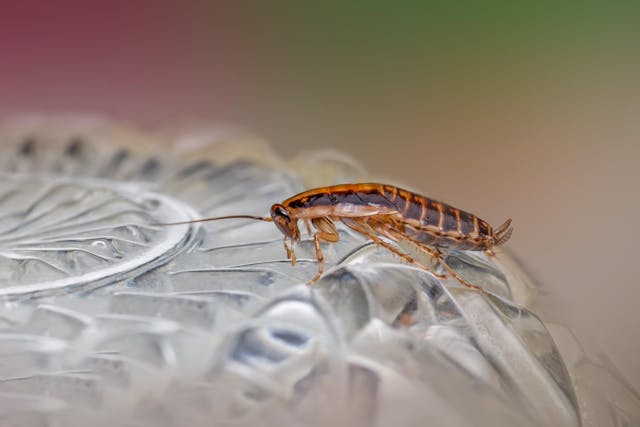

The majority of homeowners don’t think about pest control until they find something. A roach by the drain, a line of ants on the baseboard, wings in a windowsill. But that bug likely wouldn’t have been there if the conditions that invited it weeks or months before – conditions like moisture. Moisture doesn’t just bring bugs, it makes your home structurally more appealing to them.
Table of Contents
How Humidity Creates Biological Opportunity for Pests?
Pests are not in your home by accident. They are there for water, food, and shelter. High indoor humidity gives them the first – and then helpfully provides the last two, as well.
Wood and drywall are hygroscopic. That means they absorb and retain water vapor from the air around them. When relative humidity (RH) remains at or above 60%, these materials absorb enough ambient moisture to soften. For subterranean termites, softened wood is a bonus. Not only is it easier for them to digest, but it also allows them to excavate mazes deep into the structural timber. They use this protection for their travel routes and nurseries. They also use it to evade predators. And they use it to hide.
The EPA recommends indoor relative humidity stay between 30% and 50% to deter pests and avoid mold. That’s a razor-thin margin, especially when you consider that most houses in the U.S. swing well above that 50% mark for a good chunk of the year (even in drier areas).
Why Moisture Defeats DIY Pest Control?
Pest control is infinitely more challenging in a wet environment. Granular pesticides dissolve or are rendered inert by moisture, as are most biological controls. Pheromone trails – the chemical signals through which pests navigate and recruit – deteriorate in dry conditions but are maintained in moist air, meaning insects can communicate and reproduce more effectively in a humid environment than in a dry one.
For these reasons, dehumidification should be part of any real pest management strategy. Real pest management – also known as Integrated Pest Management (IPM) – focuses on breaking the pest life cycle rather than on reacting to sightings. Desiccating eggs and larvae through dehumidification is one of the most effective interventions available, and one that involves no chemicals. Dry air kills immature insects that would otherwise mature into the next generation of the infestation.
After you have an infestation, particularly from wood-destroying organisms, humidity management alone won’t solve the problem. You’ll need to address the existing infestation and the damage it’s caused. At a minimum, you should be contacting termite control services to assess your property for the extent of the damage and to give you a proposal for remediation. The moisture was their entry. The infestation was the result.
The Hidden Zones: Attics and Crawl Spaces
Hidden from view beneath your floorboards, bets are that you can’t say whether your crawl space is damp or dry, clean or dirty, pest-free or hives of creepy-crawlies. Yet, the health and happiness of your home and family are dependent upon such mysteries.
Why? Because those conditions in your crawl space don’t stay put. They rise. They’re in your air.
By default, 50% of your house’s air rises up from below, working its way through the floor as part of that crucial, life-sustaining exchange. If the air below your floor is wet, humid, polluted, or even infested with mold spores and mites, you’ve got a family breathing in whatever is down below.
Pipes, Condensation, and Cockroach Colonies
Leaking pipes and “sweating” HVAC ducts may not result in visible water damage. But the slow seep behind drywall or the condensation pool that forms under an insulated duct is enough to keep a colony of German cockroaches in business. Cockroaches actually require a source of water more than food. Eliminate it and their numbers crash. Allow even a little standing water along the leakiest edge of a basement utility sink, and the sink drawer can become a smorgasbord for brown-banded cockroaches.
The same goes for silverfish, another insect that has an intimate relationship with moisture and humidity. Silverfish are often drawn to the residue left by shampoos and soaps and the glue in wallpaper. But the insects themselves are feeding a mold that grows on substances they digest. It’s all about moisture. That’s what they need to survive.
What Practical Humidity Control Looks Like
Ensuring that RH stays within the 30% to 50% optimal range involves more than just using a dehumidifier when you remember, though. You need to stay on top of pipe leaks, make sure your HVAC’s drainage line is open, enhance your attic’s ability to expel moisture, and regularly check the vapor barrier in your crawl space. Plus those exhaust fans in bathrooms and kitchens must vent outside, not just conveniently into your attic space.
Most importantly, an annual inspection of your crawl space and sill plates will catch any moisture concerns before they compound into structural problems.
