
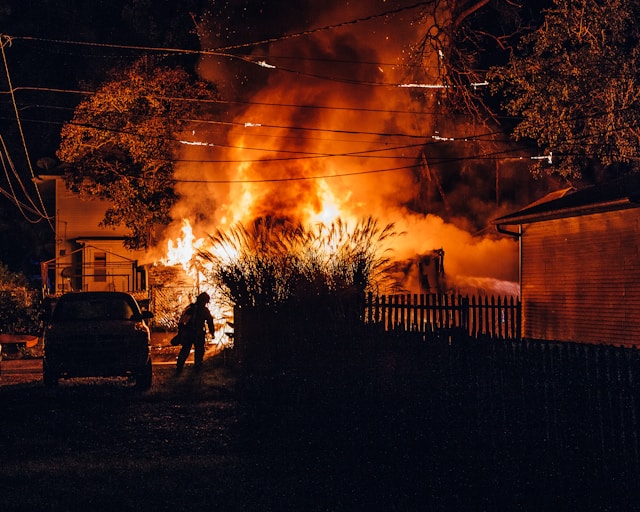

When most people think about wildfires burning houses down, they think of a wall of flame approaching the front door. Rarely is that the case. The biggest threat usually arrives first, often long before the fire itself. It comes in the form of embers – burning bits of bark, leaves, and wood that the wind can drive a mile or more ahead of the fire. Knowing how embers behave, and where they’re likely to end up, is the beginning of any truly effective home wildfire defense.
Table of Contents
Why Embers Destroy Homes Before Fire Arrives?
Embers, which are also known as firebrands, are light enough to be blown by the wind and can travel long distances from a wildfire. In certain circumstances, they can rain down with such intensity that firefighters describe it as an “ember blizzard.” Embers don’t have to see the flames licking at your roof to destroy your home; they just have to land near something flammable.
Where Embers Get Inside
As long as embers remain on the exterior, most properly constructed homes can resist ignition. The true concern is when embers get inside, hidden in an enclosed area, and are able to smolder and eventually ignite the structure.
Typical adjustable vents are made with 1/4-inch mesh screening. This is sufficient for keeping the bugs and some particles out, but not the embers – the small flames that can easily make it right through and especially once mesh screening begins to corrode and gaps open up, or against the mesh where they can ignite the screen vent and burn from the inside out.
The attic which has everything it needs to burn will then quickly spread to and throughout the entire roof system. This is why vent upgrades are crucial – more homeowners need to be aware that they can replace those cheap screen attic and crawl space vents with alternatives tested to block wind-driven embers. brandguardvents.com provides ember and flame resistant vents that easily replace existing vents with no special tools and can be installed by a handyman or even the homeowner. These vents are specifically designed to resist the intrusion of embers and flames while not restricting airflow.
The 0-5 Foot Zone: Your First Line of Defense
Scientists who examined why some homes caught fire and others didn’t during a wildfire came up with the Home Ignition Zone – a concept made up of several rings of defensible space around a building, each with varying levels of vulnerability. The ring closest to the building’s exterior walls, the zero to five-foot zone, is the most critical.
Here, the highly flammable mulch and easily ignitable stored firewood and other materials, combined with the flammable wooden planter boxes and dense, shrubby ornamental vegetation, virtually ensures that embers or flames will find their way to your home or ignited into direct flame against the structure. Replacing the wood chip mulch with gravel or decomposed granite in the zero to five-foot zone eliminates the first chain in the sequence of ignition. Nothing combustible should be in direct contact with the building.
The Gutter-to-Ground Problem
Gutters are a unique piece because the failure model is so consistent. Gutters fill up with dry leaves and all sorts of stuff year-round. When embers land in that stuff, they’ve got what they need, dry organic material packed into a trough right along the edge of the roof.
Even if your roofing is Class A fire-rated, a gutter fire puts flame right at the edge of the roof where it meets the fascia board. The rating doesn’t cover that. Keeping gutters clear when fire danger is high, installing gutter guards that prevent clogging and adding metal mesh covers over the openings of downspouts are elements of what some practitioners describe as a gutter-to-ground approach. That is, take out every single link in the chain from an ember landing to the start of structural flame.
What to Do On High-risk Days
When the conditions get unfavourable – like high winds, low humidity, and high temperatures – there are some steps that become more immediate, rather than being related to the season.
At such times, you should immediately move your patio furniture, cushions, and doormats inside. These are what firefighters call “the littlest losers” as they can easily ignite from blowing embers, often right up against your house. Also, if possible, close and protect or cap any openings to the home, such as the attic or eave vents.
Connect your garden hose to the spigot and leave it where firefighters can easily access it, though hopefully, you won’t be there when they come.
Also, close all windows and doors as you leave your house. The few minutes a well-vented home can resist flames can make the difference in whether you have a home to come back to.
Thinking in Systems
Protecting your home against embers is not something that can be achieved with just one action. It involves a series of carefully connected decisions regarding surfaces, gaps, and materials – each of which minimizes the likelihood of embers finding a resting place and starting a fire. Upgrading your roof may not be enough on its own. However, when considering your roof, vents, perimeter, and gutters as part of an overall system, rather than individual components, the odds of safeguarding your home improve.
