
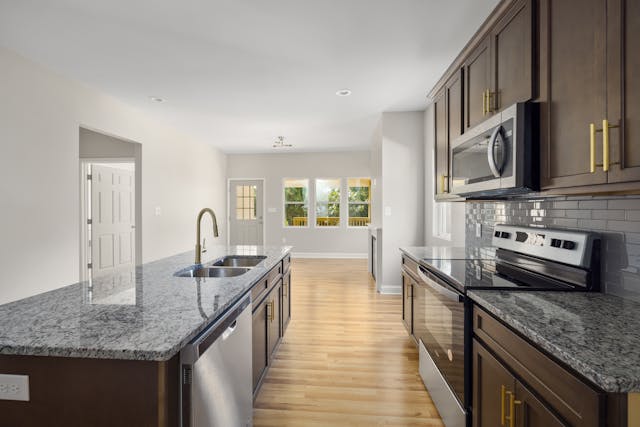

Natural stone is one of the most desirable materials for modern kitchens. Its durability, natural beauty, and timeless character make it a popular choice for benchtops in high-end homes. However, what many homeowners don’t realise is that the performance of stone surfaces can vary significantly depending on the climate they are installed in.
What works perfectly in a dry inland environment can behave very differently in a humid coastal city. Sydney’s climate, characterised by ocean air, fluctuating temperatures, and seasonal humiditcreates a unique set of challenges for natural stone surfaces.
This is why choosing the right stone benchtop Sydney solution involves more than simply selecting a beautiful slab. Climate conditions play a major role in how stone performs over time, influencing everything from moisture absorption to long-term durability. Understanding how Sydney’s environment affects natural stone helps homeowners make smarter decisions when designing their kitchens.
Table of Contents
Why Stone Behaves Differently in Sydney’s Climate
Natural stone is not a completely inert material. Even polished slabs contain microscopic pores that interact with the surrounding environment. In dry climates, this interaction is minimal. But in humid environments like Sydney, the stone surface constantly exchanges moisture with the surrounding air.
Humidity allows moisture to penetrate these microscopic pores, which can lead to staining, discolouration, or mineral deposits over time if the stone is not properly sealed. Sydney kitchens are particularly vulnerable because cooking activities already generate heat and steam. When this combines with naturally humid coastal air, the moisture levels around benchtops can increase significantly throughout the day.
Over time, repeated exposure to moisture can alter the appearance and durability of some natural stone types. This is why selecting and installing the correct stone benchtop Sydney material requires an understanding of how different stones respond to moisture.
Humidity and Temperature Fluctuation
One of the biggest environmental factors affecting stone surfaces is the combination of humidity and temperature changes. Natural stone expands and contracts slightly when environmental conditions change. While these movements are extremely small, they can accumulate over the years and affect the structural stability of the installation.
Humidity can cause stone to absorb moisture and swell slightly, while temperature changes can cause it to contract again. When these cycles repeat over time, the stone may develop micro-cracks or stress points if the installation does not allow for natural movement.
Temperature variation also plays a role in kitchens. Heat from stovetops, ovens, and sunlight entering through windows can create localised temperature differences across the stone surface. These variations can cause subtle expansion and contraction patterns that place stress on the slab if the installation does not account for movement. In regions like Sydney, where seasonal humidity fluctuates, these small structural changes become more significant over time.
The Coastal Air Factor
Another climate element unique to Sydney is coastal air. Salt particles carried in ocean air can settle on surfaces throughout the home. Over long periods, this salt exposure can contribute to subtle surface degradation in certain types of natural stone. Salt can also interact with moisture absorbed into porous stones. When the moisture evaporates, minerals may crystallise on the surface, leaving white deposits or dull patches.
This process, sometimes called efflorescence, can affect the appearance of stone surfaces and make them look aged prematurely. Homes closer to the coast, such as those in suburbs near the harbour or beaches, are more likely to experience this effect. While these changes do not necessarily mean the stone is failing structurally, they can affect its visual quality if the material is not properly sealed or maintained. Selecting the right stone benchtop Sydney material helps reduce the impact of coastal exposure.
The Hidden Issue: Stone Porosity
One of the most misunderstood characteristics of natural stone is porosity. Different stones have vastly different levels of porosity, meaning they absorb moisture at different rates.
Marble and limestone are relatively porous stones, which makes them more susceptible to staining and moisture absorption in humid environments. Granite is denser and generally more resistant, though it still requires sealing to maintain protection.
Highly porous stones exposed to humidity can absorb moisture, which may lead to discolouration, mould growth, or structural weakening over time if the surface is not protected. This is why stone selection must consider environmental conditions.
A stone that performs well in a dry region may require significantly more maintenance when installed in a coastal kitchen. Professional suppliers specialising in stone benchtop Sydney installations often recommend materials with lower porosity to improve long-term performance in humid environments.
Why Installation Methods Matter More in Humid Regions
Climate not only affects the stone itself. It also influences how the stone should be installed.
In humid environments, installers must account for expansion, moisture movement, and ventilation beneath the stone slab.
Without proper installation techniques, trapped moisture can cause staining beneath the surface or lead to adhesive issues. For example, expansion joints may be required in larger stone installations to allow the material to expand and contract naturally without cracking.
Additionally, the substrate beneath the stone must be completely dry before installation. Moisture trapped under the slab can slowly migrate into the stone and cause discolouration over time. These technical considerations highlight why climate-specific expertise is important when installing a stone benchtop Sydney surface.
The Risks of Ignoring Climate Factors
When climate conditions are ignored during stone selection or installation, several long-term problems can develop. One of the most common issues is premature staining. Moisture entering the stone can carry pigments from foods, oils, or liquids into the pores of the surface.
Another issue is surface dulling. Continuous moisture exposure can gradually alter the finish of the stone, making polished surfaces appear cloudy or uneven. Humidity may also encourage mould or mildew growth around joints, grout lines, or edges where moisture collects.
Over time, repeated expansion and contraction cycles can create micro-cracks or weaken structural integrity. These problems do not appear immediately after installation. Instead, they develop slowly over the years, which is why they are often mistaken for general wear and tear rather than climate-related issues. Proper planning during the selection and installation process can prevent most of these problems.
How Professionals Solve Climate-Related Stone Issues
Professional stone suppliers and installers take Sydney’s environmental conditions into account when recommending materials and installation methods.
One of the first steps is selecting the right stone type. Dense stones with low porosity tend to perform better in humid climates because they absorb less moisture. Engineered stone products can also offer advantages because their manufacturing process creates a more uniform and less porous surface.
Another important step is applying high-quality penetrating sealers. Sealers act as a protective barrier, reducing the stone’s ability to absorb liquids and moisture from the environment. In humid climates, these sealers may need to be reapplied periodically to maintain protection.
Proper ventilation in the kitchen also plays a role. Good airflow reduces moisture buildup and helps keep stone surfaces dry. These combined strategies allow a stone benchtop Sydney installation to remain stable and attractive even in challenging environmental conditions.
What Sydney Homeowners Should Ask Before Choosing Stone
Before selecting a stone benchtop, Sydney homeowners should ask a few important questions.
- First, ask about the porosity of the stone. Understanding how much moisture the material absorbs helps determine how well it will perform in a humid kitchen.
- Second, ask about sealing requirements. Different stones require different sealing intervals, and knowing this ahead of time helps plan long-term maintenance.
- Third, ask about installation methods. Professional installers should account for expansion joints, moisture barriers, and proper substrate preparation.
- Finally, consider the location of the home. Properties closer to the coast may require materials with greater resistance to salt exposure and humidity.
These considerations help ensure that the final stone benchtop Sydney installation is not only visually stunning but also durable for decades.
Conclusion
Natural stone remains one of the most beautiful and durable materials available for kitchen design. However, its long-term performance depends heavily on the environment in which it is installed. Sydney’s humid coastal climate introduces challenges that are often overlooked during the design process. Moisture absorption, temperature fluctuations, and salt exposure all influence how stone behaves over time.
By selecting the right materials, applying proper sealing, and using climate-appropriate installation methods, these challenges can be managed effectively. The best stone benchtop Sydney installations are those that consider both aesthetics and environmental conditions from the beginning. When climate is treated as a key design factor rather than an afterthought, natural stone can deliver the beauty, durability, and longevity homeowners expect.
FAQs
1. Does Sydney’s humidity affect natural stone benchtops?
Yes. Humidity can cause porous stones to absorb moisture, which may lead to staining, discolouration, or mould growth if the surface is not properly sealed.
2. Which natural stones perform best in humid kitchens?
Denser stones such as granite and quartzite generally perform better because they absorb less moisture than softer stones like marble or limestone.
3. How often should stone benchtops be sealed in Sydney?
Depending on the stone type, sealing may be required every 6–24 months to maintain protection against moisture and staining.
4. Can coastal air damage stone benchtops?
Over time, salt particles in coastal air may contribute to surface deposits or mild degradation if the stone is not properly sealed and maintained.
5. Is natural stone still a good choice for Sydney kitchens?
Yes. With proper stone selection, professional installation, and regular sealing, natural stone can perform exceptionally well in Sydney homes.
