
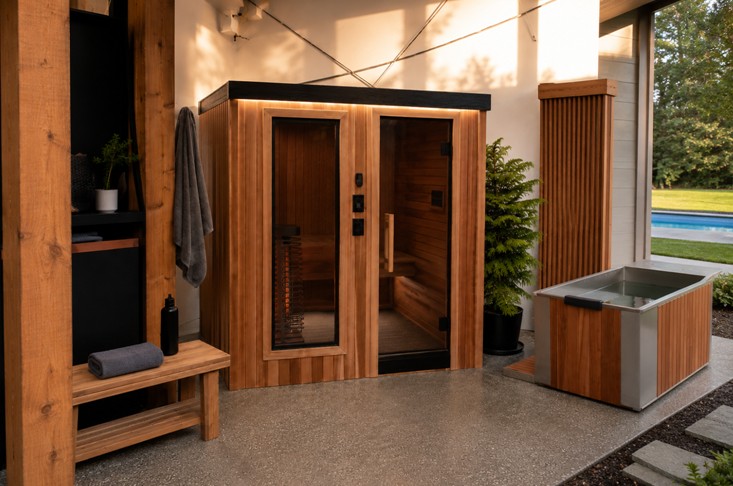

Many homeowners discover contrast therapy the same way: they start researching saunas, stumble across cold plunges somewhere, and before long they’re comparing models, materials, and features.
The problem is that a sauna and cold plunge rarely function as standalone purchases once they’re installed at home. They affect everything from electrical planning and drainage to flooring, ventilation, and how people move through the space itself.
The homeowners who end up happiest with their recovery spaces follow a different approach. Instead of choosing equipment first, they plan the environment around how they actually intend to use it. Let’s get to it.
Table of Contents
Start With the Recovery Routine
Most people immediately jump into product research. That’s understandable. Comparing sauna styles and cold plunge features is far more exciting than measuring walls or thinking about drainage.
Still, the first question shouldn’t be what you’re buying but how you’ll use it.
Someone planning an occasional weekend sauna session has very different needs than a household using contrast therapy several times per week. A setup designed for one person may feel cramped when two or three family members decide to use it regularly.
Even simple questions such as whether you’ll shower between sessions or how long you’ll spend cooling down can influence the layout.
Working through those details first creates a much clearer picture of what the space genuinely needs to accomplish. Once that framework exists, equipment decisions become much easier.
Choose the Right Location Before Comparing Models
Location influences almost every aspect of the project.
Some homeowners prefer an indoor wellness room where everything remains protected from weather and easily accessible throughout the year. On the other hand, others like the experience of stepping into a backyard sauna and cooling off outdoors afterward. Both approaches can work well, but each comes with different planning requirements.
Garages, basements, spare rooms, covered patios, and backyard structures are among the most common locations. The best option depends on available space, privacy, utility access, and how convenient the setup feels on a daily basis.
One thing worth considering: a beautifully designed sauna tucked into a distant corner of the property may receive less use than a simpler setup that’s easy to access after work or before bed.
Another thing is how the space fits into the rest of the home. Recovery areas work best when they feel intentional rather than squeezed into leftover square footage.
Plan for Water, Drainage, and Electrical Requirements Early
This is where many projects run into avoidable complications.
Saunas and cold plunges often require infrastructure that isn’t immediately obvious during the shopping phase. Electrical service, ventilation, drainage, water access, and moisture management all deserve attention before any equipment arrives.
Cold plunges create particular challenges because water eventually needs to be drained, refreshed, or maintained. Homeowners sometimes focus heavily on the plunge itself while overlooking where water will go during routine maintenance.
Electrical planning deserves similar consideration. Depending on the equipment selected, additional circuits or electrical upgrades may be necessary. Ventilation also becomes important, particularly for indoor installations where heat and moisture can accumulate over time.
Many homeowners exploring complete wellness environments work with companies offering home sauna and cold plunge solutions because these requirements can be identified during the planning stage as opposed to after construction has already begun.
Leave Enough Space Between Heat and Cold Zones
A successful recovery space isn’t simply a sauna placed next to a cold plunge.
Movement between each element matters.
People should be able to transition comfortably from heat to cold without navigating tight corners, obstacles, or slippery walkways. There should be enough room for towels, storage, seating, and whatever cooling-off period fits their routine.
This becomes especially important in smaller installations where every square foot carries extra weight. Compact spaces can work remarkably well, but they benefit from thoughtful layouts that prioritize flow.
Even a modest seating area can make a difference. A lot of people discover they spend more time resting between sessions than they initially anticipated.
Don’t Overlook Flooring and Moisture Management
Few aspects of the project receive less attention during planning, yet few have a greater impact on long-term usability.
Water will inevitably find its way onto the floor. People exit cold plunges dripping wet. Towels become saturated. Condensation develops. Moisture becomes part of the environment.
Choosing flooring that can tolerate those conditions makes ongoing maintenance much easier. Slip resistance also deserves consideration, notably in areas where people move between hot and cold environments.
Ventilation plays a role as well. Good airflow helps manage humidity and supports the longevity of surrounding finishes and materials.
These details seldom appear in marketing photos, but they’re what determines whether a recovery space remains enjoyable several years after installation.
Think About How the Space Will Be Used Year-Round
It’s easy to design around the excitement of the first few weeks. Long-term use is a better benchmark.
Outdoor installations may need protection from rain, snow, direct sun, or seasonal debris depending on the climate. Lighting becomes important for homeowners who prefer evening sessions. Seating, storage, and covered pathways become more valuable over time.
Future needs are equally worth contemplating. A setup that comfortably serves one person today may eventually be shared by family members or guests. Leaving some flexibility within the design can prevent unnecessary upgrades later.
A Better Recovery Space Starts With Better Planning.
A home sauna and cold plunge can become one of the most frequently used wellness features on a property. The projects that work best, however, don’t fixate on equipment specifications alone.
Successful planning starts with the routine itself, followed by location, utilities, drainage, circulation, and long-term usability. Once those pieces are in place, selecting the sauna and cold plunge becomes a much more straightforward process.
Treating the project as a complete recovery environment, and not as two separate purchases, can lead to a space that’s easier to maintain, more comfortable to use, and far more likely to become part of everyday life.
